Understanding the Amazon Rainforest Food Web: A Simplified Guide
The Amazon rainforest, the world's largest tropical rainforest, is a vibrant tapestry of life. Its incredible biodiversity is intricately linked through a complex food web, a network of interconnected food chains showing who eats whom. Understanding this web is crucial to appreciating the rainforest's delicate balance and the vital role each organism plays. This article simplifies the complexities of the Amazonian food web, exploring its key components and relationships.
1. The Foundation: Producers (Plants)
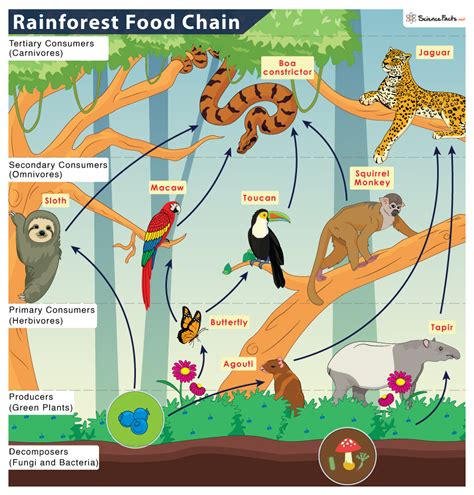
The Amazon's food web, like all others, is built upon producers. These are primarily plants – gigantic trees like the Brazil nut tree, towering kapok trees, and countless smaller plants, shrubs, and vines. These plants harness the sun's energy through photosynthesis, converting it into sugars (their food) and releasing oxygen as a byproduct. This process is the fundamental energy source for the entire ecosystem. Imagine it like the base of a pyramid – the larger the base (plant life), the more support there is for the levels above.
2. Primary Consumers: Herbivores
Herbivores are animals that eat plants. They are the next level in the food web, directly consuming the energy produced by plants. The Amazon boasts a huge diversity of herbivores, including:
Insects: From colorful butterflies sipping nectar to leaf-cutter ants stripping leaves from trees, insects form a massive component of primary consumers. Think of the sheer number of caterpillars devouring leaves – a vital energy transfer.
Mammals: Large herbivores like sloths, tapirs, and various monkeys rely on leaves, fruits, and other plant matter for sustenance. A sloth, slowly munching on Cecropia leaves, is a perfect example.
Birds: Many bird species, such as toucans and parrots, eat fruits and seeds, dispersing them across the rainforest as they move.
3. Secondary Consumers: Carnivores and Omnivores
Carnivores are animals that eat other animals, and omnivores consume both plants and animals. They occupy the next level, feeding on the herbivores. Examples include:
Predatory Birds: Harpy eagles, known for their impressive size and strength, hunt monkeys and sloths. Their role in controlling prey populations is crucial for the rainforest's balance.
Reptiles: Anacondas, jaguars, and caimans are apex predators, meaning they are at the top of their respective food chains. An anaconda constricting a capybara is a dramatic example of a predator-prey relationship.
Mammals: Jaguars, ocelots, and even some monkeys are opportunistic omnivores, consuming both plants and animals based on availability.
4. Decomposers: The Recyclers
Decomposers are essential for completing the food web cycle. These organisms, like fungi and bacteria, break down dead plants and animals, returning nutrients to the soil. This recycling process is vital for the continued growth of plants, ensuring the rainforest's perpetual cycle of life. Without decomposers, nutrients would be locked in dead organisms, hindering the growth of new life.
5. Interconnectedness and Complexity
The Amazonian food web is incredibly complex. Organisms often occupy multiple trophic levels (feeding levels). For example, a jaguar might eat a monkey (secondary consumer), but the monkey might also consume insects (primary consumer). This intricate network highlights the interdependence of all species within the ecosystem. A change in one population can have cascading effects throughout the entire web.
Actionable Takeaways:
Understanding the Amazonian food web emphasizes the interconnectedness of life.
Protecting biodiversity is crucial for maintaining the rainforest's stability.
Human activities, such as deforestation and poaching, disrupt the food web, leading to negative consequences.
FAQs:
1. What happens if a key predator, like the jaguar, disappears? The populations of its prey (monkeys, tapirs, etc.) would likely increase, potentially leading to overgrazing and depletion of plant resources. This could trigger a cascade of effects throughout the entire food web.
2. How do plants defend themselves against herbivores? Plants have developed various defenses, including thorns, toxins, and camouflage. Some even attract predators of the herbivores that are eating them.
3. What role do parasites play in the food web? Parasites, while not always directly involved in predator-prey relationships, play a significant role by weakening their hosts, making them more vulnerable to predation or impacting their reproductive success.
4. How does the rainforest’s climate affect the food web? The rainforest's warm, humid climate supports a vast array of plant and animal life. Changes in climate, like increased drought, can disrupt the food web by altering plant growth and water availability.
5. How can I learn more about the Amazon food web? Explore documentaries, research papers, and reputable websites focusing on Amazonian biodiversity. Visiting a rainforest (responsibly) offers an unparalleled learning experience.